
Leadership in rural communities often surfaces because there is an immediate problem in the community that needs solving. Action isn’t sparked by a vision of the future but by a need in the present.
On Kangaroo Island, Stephanie Wurst’s emergence as a leader in her community fits this familiar pattern, in her case initially driven by a critical shortage of childcare, “When I had my third child, there was no childcare facilities located near us. And I just couldn’t manage caring for the kids and being able to work off the farm as well. When I started talking to friends and other families in the community it became clear that this limitation on childcare directly impacted families throughout our community,” she explains. Stephanie formed a committee, but initial progress was slow and interrupted by extraordinary events – a lack of government funding, COVID and a generational bushfire that saw Stephanie’s own farm destroyed. While the committee ultimately achieved the goal of bringing childcare service to their community, by that time Stephanie’s own children were too old for her to make use of the service. However, by this time Stephanie’s commitment to her community was set and she would step up again to coordinate a feral cat trapping blitz to protect native wildlife.
“Following the fires a lot of vegetation was decimated across the island and many of the small marsupials were a lot more exposed than they ever had been before. From there the feral cat population bred up quickly feeding off that. Also, not long after the fires, I noticed on our farm I started seeing cats all the time, where I hadn’t before. But what struck me was there was no collective way to manage it in place. So, I just started getting cat traps from the local Landscape Board and started trapping.”
Initially Stephanie was only trapping on her own farm but soon her neighbours joined her and the trapping later spread across the district. Following that Stephanie was able to secure funding through Agriculture Kangaroo Island (AgKI) and in partnership with the Landscape Board roll out a pilot Farmer Blitz Trapping Program within her district, “The community support we received, particularly from farmers, comes from how passionate we are here about the environment and sustainability,” she notes. Ultimately Stephanie would like it to become a national program as the issues created by feral cats extend beyond Kangaroo Island.

While Stephanie’s initiatives have delivered vital results, her momentum was constantly being driven by rapid responses to emerging crises. It was successfully applying for the Australian Rural Leadership Program (ARLP) that gave Stephanie the space to reflect on her leadership. She notes, “I was shoulder tapped by a close friend that had done the program in the cohort before mine. I thought it seemed really interesting, the time was right and that it would challenge me.”
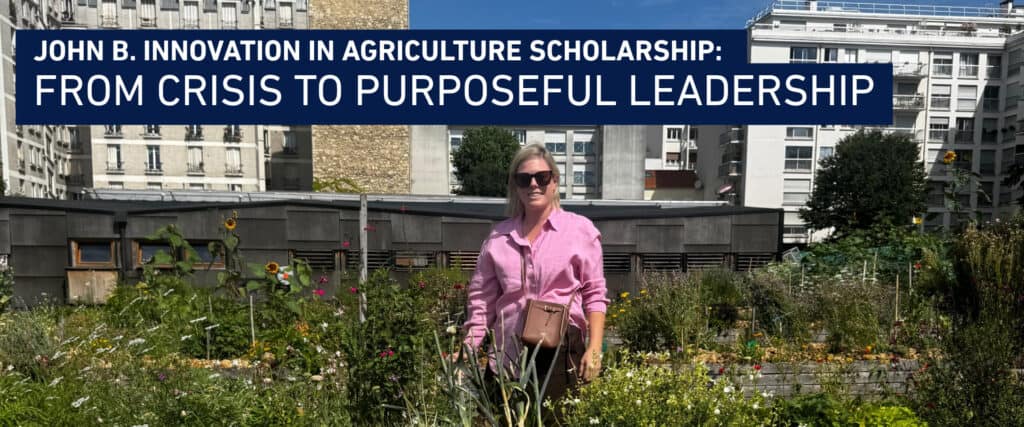
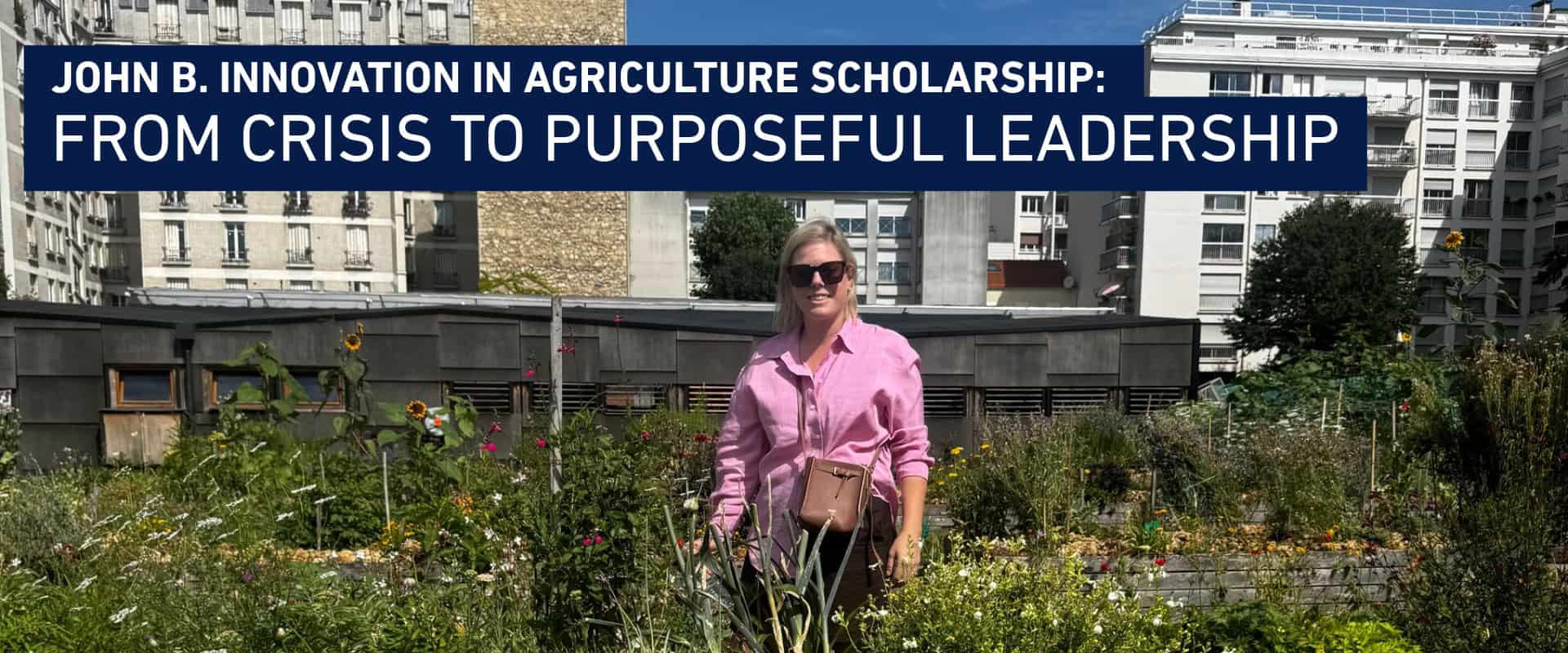
Joining ARLP, Stephanie was awarded the John B. Innovation in Agriculture Scholarship that not only funded her place on ARLP but also funded a subsequent international study tour.
Stepping into the ARLP provided a necessary circuit breaker. It challenged her to step back from what was immediately in front of her and consider how strategic, long-term leadership could build lasting community impact. Reflecting on this shift, Stephanie notes, “What the program gave me was a deep space to be curious, learn about myself and grow. And I just can’t recall ever even having that in my life. You’re so entwined in everything you’re doing. For me, that was our farm, three kids and all the things going on around us. You’re often just living in the moment, and I felt the space was such a gift. It reshaped how I react to my behaviours and situations. And it gave me a lot more clarity around what’s important to me, where I want to invest my time and where I see my future.”
That space also gave Stephanie the opportunity to reflect on her leadership to that point, “I was in a leadership space that was really good at crisis management. And I felt I was not clear on how I can keep leading forward if not in a crisis. The program gave me that capacity to see what I can do in other situations where it’s not a crisis, because I felt like I’d been in that space for quite a long time. It was a good reset for me in that regard.”
Stephanie also notes the thing that ARLP gave her that was unexpected, “The network and the relationships that I’ve made through the program. Such a diverse and amazing group of people from across Australia. I feel like we’ve always got that group, like we will always be there for each other.”
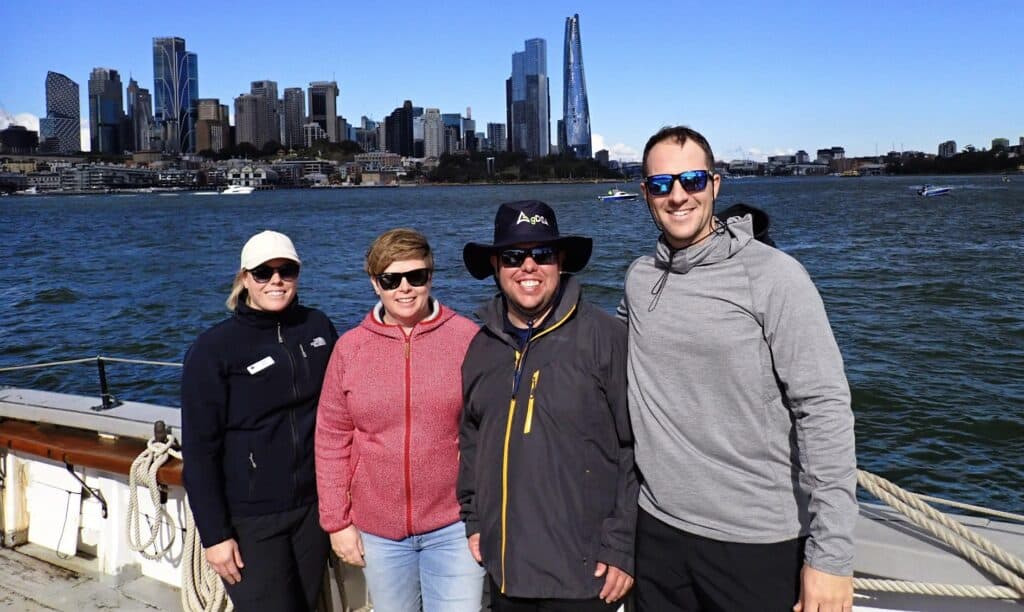
Study Tour
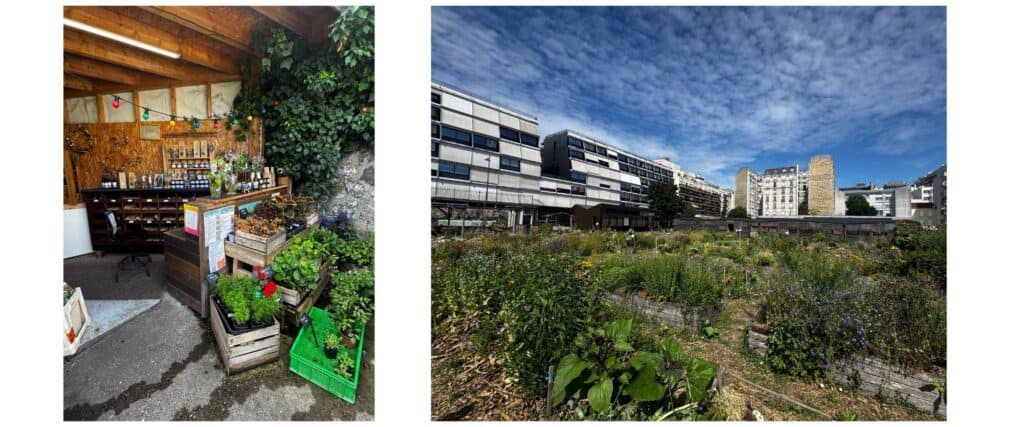
Equipped with a renewed perspective, Stephanie used her scholarship funding to travel across Europe to research urban agriculture. Urban farming (also known as urban agriculture) is the practice of growing food in cities and towns and provides a way to bring farming closer to people in urban areas. It involves raising animals and crops in small spaces, including rooftops, balconies, community gardens and unused land.
Stephanie anticipated discovering a streamlined, sustainable model. However, her study revealed substantial operational friction, from high energy costs and restrictive red tape to complex distribution networks and investors with varying levels of commitment. The experience revealed that urban farming was far harder to sustain commercially than was often portrayed.
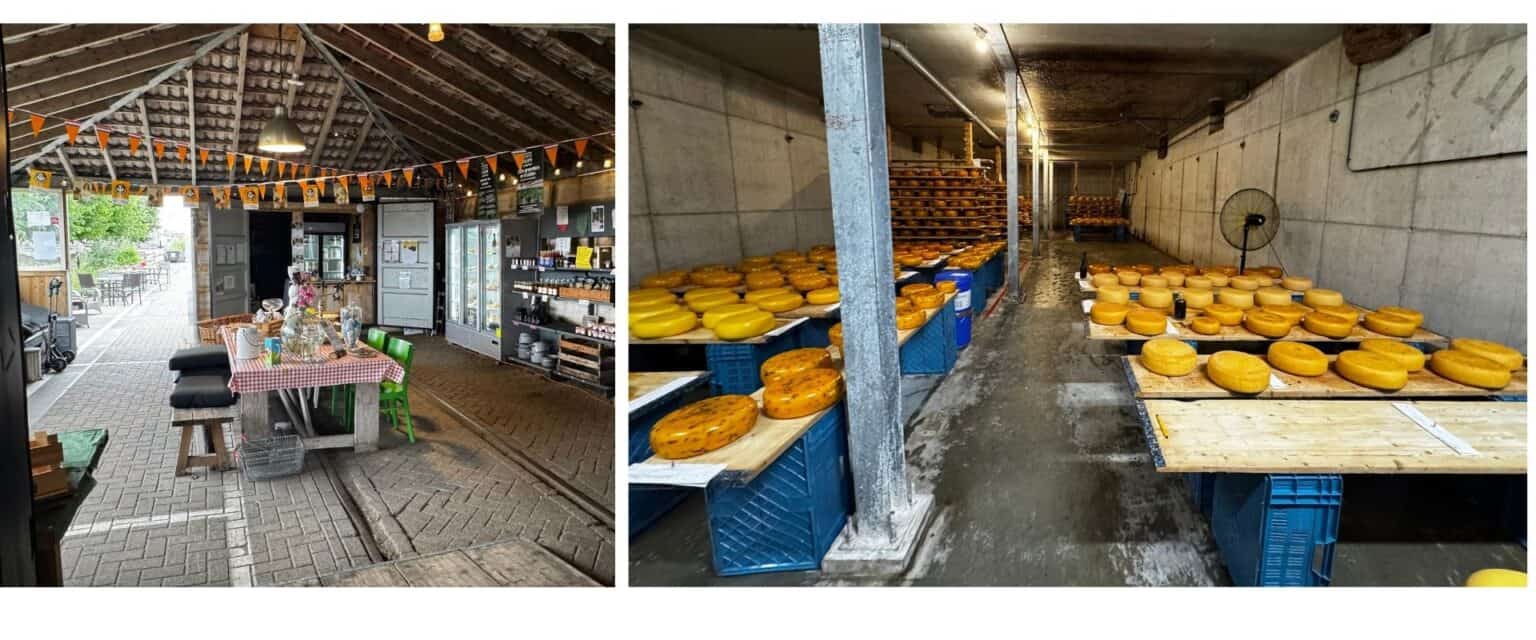
“I really pictured that the farms I was going to visit were some great examples of how they’d structured these urban farms, made them viable and how they all work together structurally with governance and the political sphere. And what I found was quite different. Even those farms that I visited that were operating some of them weren’t sustainable – even ones that had been operating long term. There were so many factors that play into it and it wasn’t just one thing that limited their commercial viability.” Stephanie is quick to highlight that while European conditions are different from Australia, challenges remain, “Based on the research and findings that I saw throughout Europe, at this stage I don’t think it’s a viable way to produce food on the scale that we need to be producing. However, I do think there’s opportunities to innovate the systems and we can become more efficient in how we’re operating urban farms. So, I do think there is potential in the future.”
Reflections
Looking past the operational hurdles, Stephanie identified a critical insight, urban agriculture provides a powerful medium for educating city populations about where their food comes from. Armed with a clearer understanding of both rural realities and urban challenges, she returned to Australia determined to foster better policy alignment between regional producers and urban communities, “This goes so much deeper than just urban agriculture. I want to be able to try to bridge that divide as much as I can between urban and rural communities. Growing up in an urban area and now living rurally for almost twenty years, I think I’ve got a good lens on both communities, and I can see how I can do that.”
She is now directing her leadership into policy development and agricultural board roles, shifting her focus from managing local crises to considering the bigger picture and effecting deeper, systemic change for the long term, “I have been on numerous boards and I just feel like moving forward for me, that’s the perfect space for me to go into. And I’m really excited to be able to take the insights provided by the John B. Innovation in Agriculture Scholarship into that realm.”
The John B. Innovation in Agriculture Scholarship will be available to a participant for the next ARLP, Course 34. Follow the link below to learn more about the program.