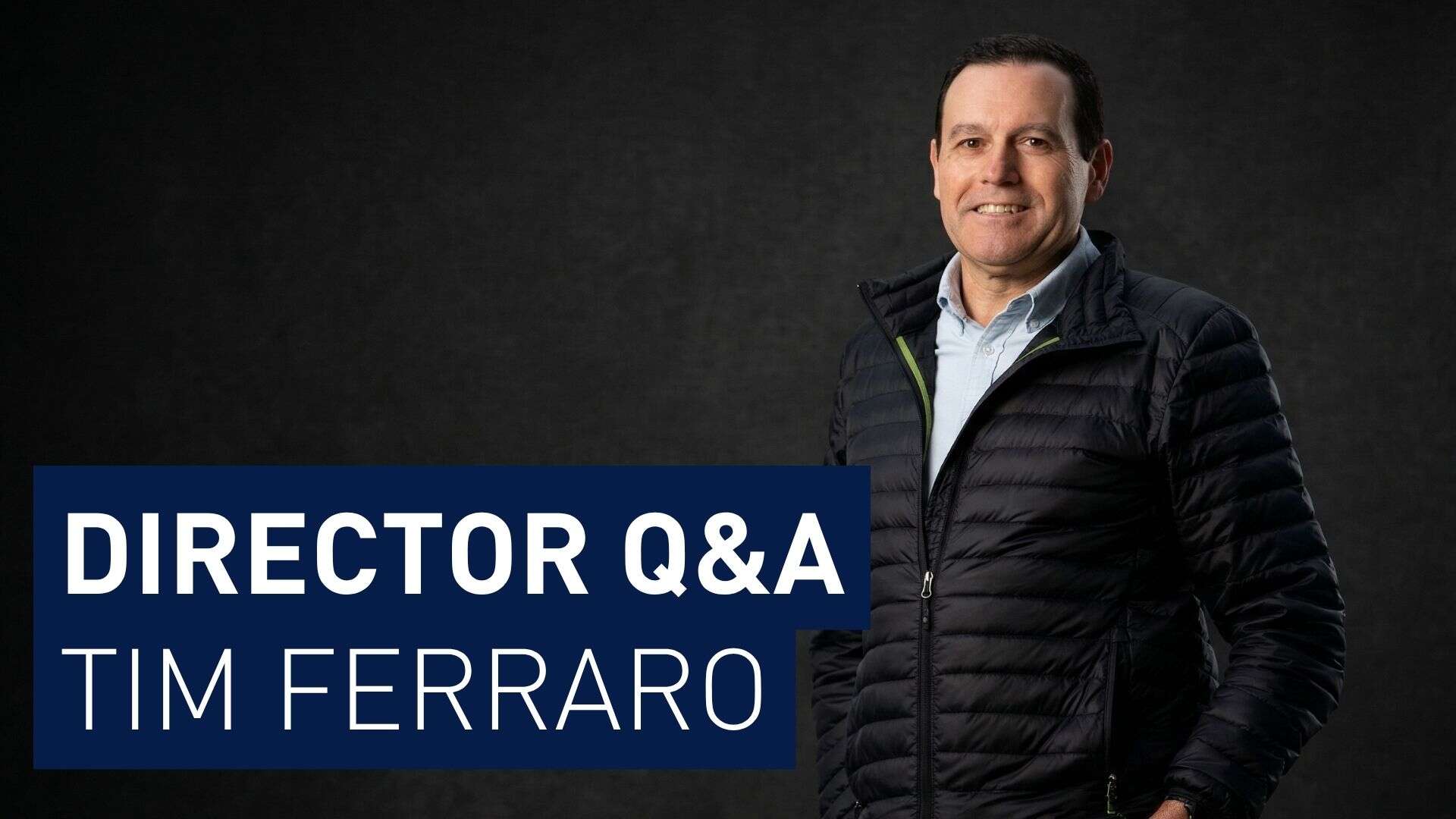
The Australian Rural Leadership Foundation (ARLF) recently welcomed Tim Ferraro to its Board of Directors. A graduate of the Australian Rural Leadership Program (ARLP C24), Tim brings a wealth of experience in natural resource management, governance and regional advocacy to his new role. He is passionate about land restoration and projects that deliver meaningful environmental, social and economic benefits to rural, regional and remote Australia.
Tim took some time out to share his thoughts on his journey and how he sees his role as a new ARLF director.
Can you share a bit about your professional background and how it aligns with the ARLF’s mission?
My career has been deeply rooted in regional Australia, having lived and worked in regional areas almost my entire life. Professionally, my focus has been on land restoration and natural resource management across the public, private and not-for-profit sectors. I’ve always approached this work through a systems perspective, looking at what works for individual landholders and the local landscape. In the course of my different roles, I’ve seen the critical importance of leadership and education in their broadest contexts. I’ve seen firsthand how education and leadership act as the way out and the way up for people from diverse and sometimes disadvantaged backgrounds. In that way my involvement with the ARLF has been a natural fit – as a course participant, donor and now as a director. I think the ARLF makes an impact that far outweighs the size of the organisation and it remains a critical capacity for rural, regional and remote Australia that we need to keep building.
What inspired you to join our board?
It’s really a natural extension of my long involvement with the ARLF. When I was interviewed for the ARLP I made a commitment to contribute back to the organization however I could. For a number of years that meant contributing financially as a monthly donor and attending events. Joining the board is about continuing to be true to that initial commitment. Additionally, having studied, consulted and delivered on strategy and governance for many years, I feel I can leverage that expertise to make a meaningful contribution to the board.
What are your key goals as a board member?
My primary goal is to challenge and be challenged. I want to bring my perspective to the table but remain deeply open to the perspectives of others – in line with the approach the ARLF board induction describes as “holding strong views lightly”. I also want to help the organisation position for what’s next and work through its current challenges in the context of a lot of global uncertainty, how we make that work and how we build resilience for the long term. Given my background, I am particularly focused on helping the board integrate climate and nature-related reporting and resilience into its long-term strategy. This would be a great addition to the leading work we are doing on First Nations governance.
How do you envision contributing to the growth and success of the ARLF?
I see a real opportunity to help the ARLF navigate the global shifts happening around nature, climate and carbon reporting and we can see the interplay of those things with the current situation in the Middle East. I want to ensure we are equipping the ARLF and the leaders who come through our programs to be mindful of climate resilience and adaptation, just as they are mindful about personal and community resilience and adaptation. It’s about positioning the ARLF to handle the reporting standards that will eventually filter down to organisations of our size and helping to embed that thinking into the business. Beyond that, I aim to contribute through my background in strategy, governance and risk management. My goal is to ensure we’re operating at best practice, and in a way that reflects the scale of our organisation. While I believe the board is already operating very effectively, there is always room to learn and improve. I want to help us identify and make those changes that will keep us robust and fit for the future.
Can you discuss a past experience where you helped drive positive change in an organisation or community?
There are many examples that come to mind, but one really stands out because it pulls together many of the threads we focus on at the ARLF. A number of years ago I managed a structural adjustment program in far West New South Wales. It was designed to improve the viability of marginal graziers who were struggling with drought, high interest rates and low commodity prices. Looking back at the diverse programs we delivered, I believe we made the most significant difference through our young leaders programs. I still see those participants in leadership roles today, and it gives me a lot of satisfaction to know I played a small part in their development and their ability to contribute to Far Western NSW. In all my work and community roles, seeing people stand up to make a difference is incredibly rewarding. Ultimately, what I find most fulfilling is seeing individuals go above and beyond what they thought they were capable of and helping them make good things happen in their communities.
What do you see as the greatest opportunity for the ARLF and/or leadership in rural, regional and remote Australia in the coming years?
The greatest challenge, and therefore the greatest opportunity, is climate adaptation. We are seeing more frequent and severe natural disasters and our regional leaders need to be equipped to build infrastructure and social resilience. There is a massive role for the ARLF in helping communities prepare for these events before they happen. The ARLF has already been doing impactful work in drought resilience with the Future Drought Fund’s Communities Program for several years now. This is an example of how the ARLF is uniquely positioned to be part of building the capacity of the people who will lead the response to the climate challenge in rural, regional and remote Australia.
In what ways do you hope to engage with ARLF stakeholders?
I travel a fair bit for my work, and I intend to use that as an opportunity to engage with the alumni network more broadly. As much as possible I want to fly the flag for the ARLF, particularly where I can add value with sponsors and partners. More generally, making time to check in with stakeholders and alumni to hear how they are going and how the ARLF can continue to support them.
What message would you like to share with our alumni and partners?
Despite the challenges we face, particularly around climate, I am incredibly positive about rural, regional and remote Australia and the things we can do. However, we must continue to push to ensure our contributions are recognized and that we receive our fair share of national resources. My purpose has always been about working with people to improve rural, regional and remote Australia and I remain very committed to that. It’s truly the best place to live, work and thrive. I have a positive outlook on our ability to meet challenges such as climate change and the part the ARLF can play in it.
What leadership qualities do you think are most important for driving positive change in rural, regional, and remote communities?
The ability to actively engage and listen is paramount. I think a lot of the polarisation and disconnection in rural Australia is because they feel unheard. We need to move away from top-down leadership and instead focus on meeting people where they are, building relationships and then working on shared outcomes and responses to inevitable change. As the ARLP taught me, leadership isn’t about holding a formal position of authority, it’s about contributing wherever you are regardless of title. Most importantly and to pick up on an earlier comment, leaders should have a vision and perspective but hold that strong view lightly, remaining open to change while they drive it.