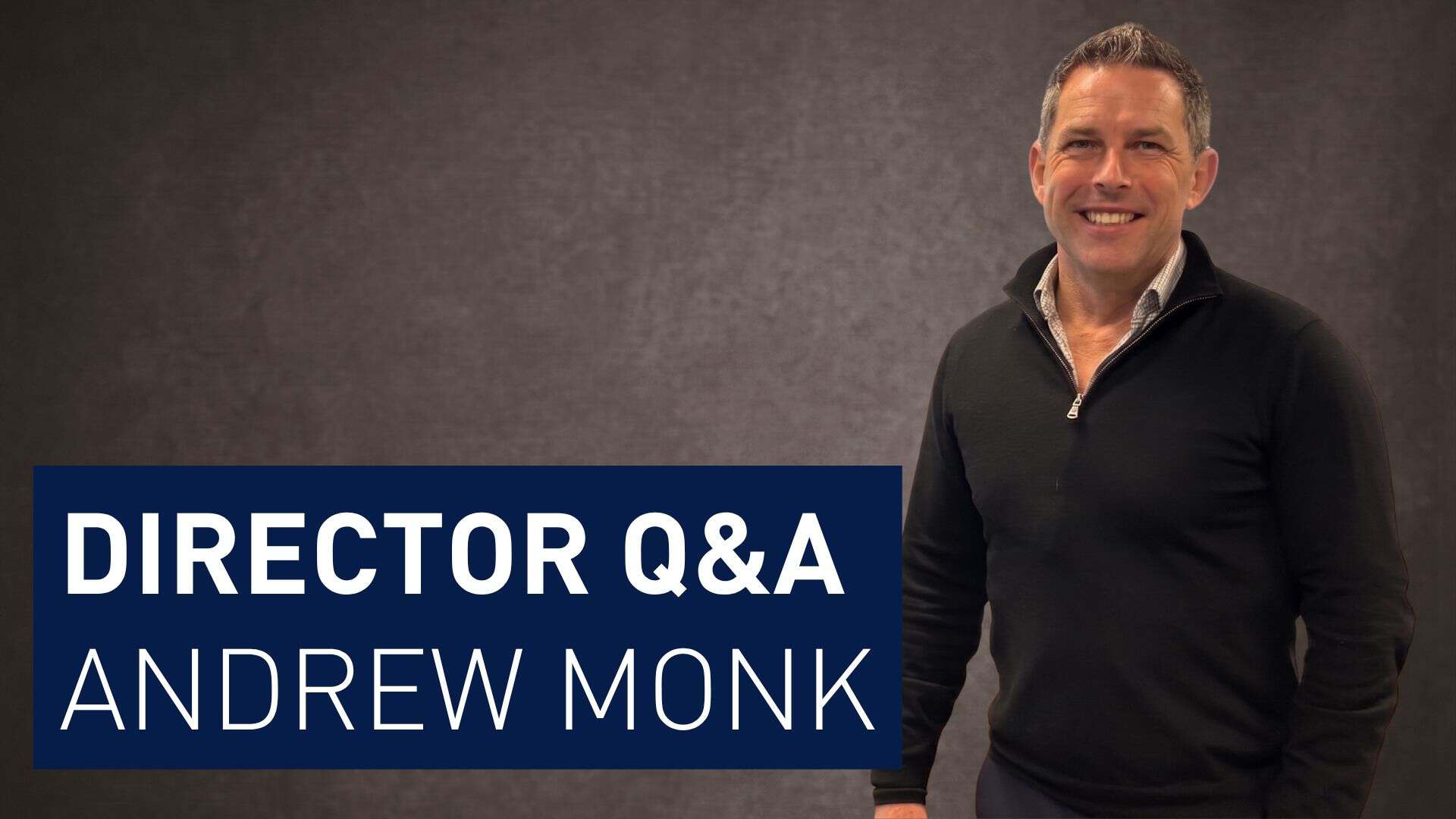
Andrew Monk joins the Board of the Australian Rural Leadership Foundation (ARLF) at a pivotal moment in the organisation’s history as it enters a new phase under the leadership of Chair Melissa Fletcher.
Andrew brings a career shaped by agriculture, waste management and new energy – sectors that are intimately connected with delivering positive impact for rural, regional and remote Australia. He is Chairman of energy company Enervest, and a non-executive director of Kialla Holdings, a flour and feed mill in Greenmount, Qld.
An alum of Australian Rural Leadership Program (ARLP) Course 9, Andrew took some time out to share his thoughts on his journey and how he sees his role as a new ARLF director.
Can you share a bit about your professional background and how it aligns with the ARLF’s mission?
I grew up in the outer suburbs of Melbourne and while doing a science degree, worked with farmers migrating between Queensland and Victoria. Later, in my twenties I owned and managed farming and food interests in South-East Queensland. Those experiences shaped my life and work trajectory. Since then my business interests have been anchored in rural industries across three sectors: agrifood, waste management and new energy. All those industries are in flux, requiring leadership and innovation. I spent many years deeply engaged with the for-purpose industry body Biological Farmers Ltd (later Australian Organic Ltd), which gave me a coalface, kitchen-table view of this country, including its diversity and tensions. These experiences have ground into me what the expectations of leadership feel like when policy, markets and interests collide. The ARLF’s key ideas of leadership around agency, confidence and connection, inspiring leadership that’s practical and being judged by what changes on the ground, resonates with what I aspire to turn up with and invest in each day.
What inspired you to join the ARLF Board?
The ARLF is awash in legends, people dripping in integrity and incombustible community spirit and it has connected me with trusted colleagues and fostered enduring relationships. Joining the Board felt like a natural step in reciprocating for a remarkably generous and abundant network of minds and hard-working hearts.
What are your key goals as a Board member and how do you envision contributing to the growth and success of the ARLF?
The organisation is approaching a fork in the river. Decisions around strategic focus, resourcing and funding models will shape how effectively the ARLF navigates the coming decade and builds on the work to date under the energies of Matt Linnegar and his team. I hope to bring a complimentary commercial lens to those conversations, while helping engage the diverse and geographically dispersed alumni. We all stand to gain from the Foundation continuing to grow its reputation and impact, particularly given the resources and the efforts of many people that has been committed to getting to this point. I hope to be a feedback conduit for and with alumni, while inspiring with “ask not what the Foundation can do for you”.
Can you discuss a past experience where you helped drive positive change in an organisation or community?
With my time leading a large, diverse not-for-profit farmers association where regulation, market access and ideology often pitted members against one another, I have encountered many a squabble over technical standards and market regulation. This work involved creating time and structure for listening and feedback. Then shaping policy positions that a clear majority could stand behind, while focusing on the common ground on which (almost) everyone stood. Some things just take time: to listen, to engage and then take an action that a super majority will back and own. It also requires standing your ground where it is clear a noisy minority simply wants to tear down or obstruct, rather than back and build for the greater good. Some of these “squabbles” legitimately have involved standing up for the interests of a minority otherwise quashed by pure numbers of democracy – chicken farmers as one example. A shrinking number of them supplying a critical product in our food chain, often taken for granted, and little understood by the majority of urban Australia. I have gone into bat for such minorities where it is clear there is a values-based cause worth fighting for. For me, these experiences reinforced that even highly fractal communities can find coherence when conversations are handled with care and resolve, and common ground and common sense is focused on. Sometimes it is nothing more than shared values.
What do you see as the greatest opportunity for the ARLF and/or leadership in rural, regional and remote Australia in the coming years?
The ARLF has unique attributes: its vast network, its credibility, its lived experience (and expertise) across regions. Catalysing and sparking up what is a gargantuan latent talent and values pool across this country, for some of the big issues facing rural Australia, is a massive opportunity that is in all our hands.
In what ways do you hope to engage with ARLF stakeholders?
Listening and mingling where possible, at events, in one-on-one conversations, and in the inevitable impromptu bump-ins that happen across this country. A particular personal aim of mine in the years ahead is to visit two ARLF legends: Emma Jackson in Far North Queensland and Rob Watson in Western Australia.
What message would you like to share with our alumni and partners?
Our network has so much potential energy for impact if we dare to connect and step into some of the biggest opportunities and challenges facing us. It is about taking change by the hand rather than it taking us by the throat. More than ever, it seems there is a cacophony of so-called leaders and loud voices who are playing roles in helping divide communities and the good will and spirit that comes with that. Rural, regional and remote Australia has witnessed massive economic, social and cultural upheavals and change this century. We also have this globally unique gift of having the oldest continuous cultures living and working amongst us, and the consequent challenge to lift our game as a nation to respect, engage and enhance this living cultural and spiritual heritage for the benefit of all. I would particularly like to see us as a network lead the leaning in and learning, so that our nation can act decisively to authentically shift the dial on closing the gap. Our collective performance on this front over recent decades has been, by any measure, abysmal. We need to have the dashboard of this in our faces like the petrol price signs we drive by every day, talk about it, and do something about it.
What leadership qualities do you think are most important for driving positive change in rural, regional and remote communities?
Leadership shows up in the mundane as much as the dramatic – turning up again and again to town hall meetings, holding a hose on the back of a truck or staying in a difficult conversation across the fence when it would be easier to walk away. Back in ARLP Course 9 we read Susan Scott’s Fierce Conversations. The line that stuck with me was that “relationships succeed or fail one conversation at a time”. I’m up for conversations that lead to real change and the kind of progress our communities need and are crying out for. Those born and raised in the country often have these values naturally instilled in them. In contrast, urban education systems are frequently at odds with this mindset, offering platitudes and doublespeak on critical issues – from ensuring farmers thrive to protecting biodiversity in the bush. It takes the humility to listen before acting, the courage to challenge familiar patterns, and the patience to work at the speed of trust rather than the pressure of urgency. We need less symbolism and grandstanding and more straight talk and tangible action. We all have a role to play and there is plenty of work to be done.