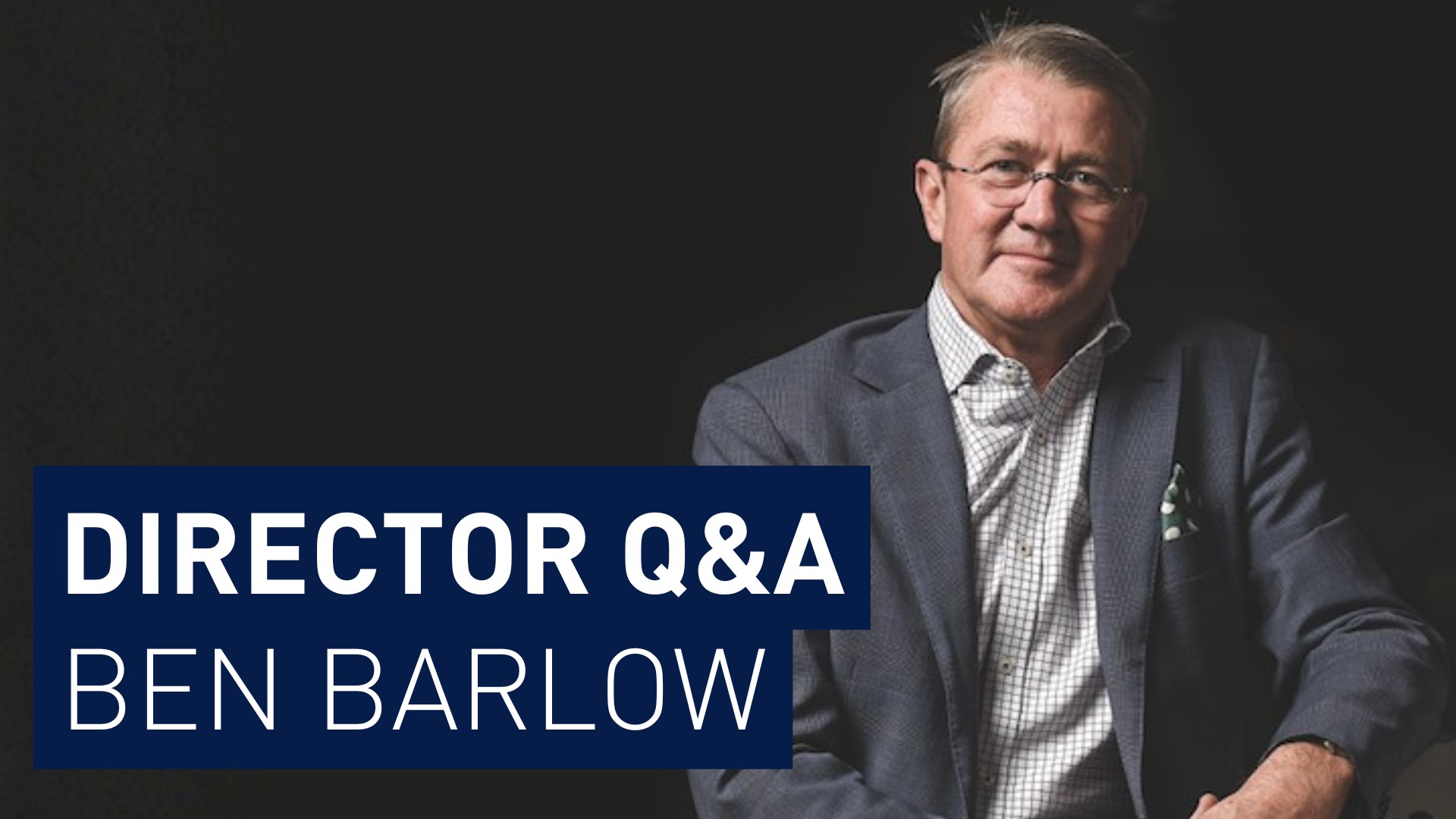
For Ben Barlow leadership in rural Australia is not an abstract concept, it is a lived experience shaped by family legacy, community connection and decades spent working across regional industries. Raised in a long-established farming family near Moama, Ben’s story reflects the journey of someone who has always been deeply anchored in the challenges and satisfaction of life in rural Australia.
Over the past 25 years, Ben has built a distinguished career spanning agribusiness, finance, governance and innovation. From senior banking roles to leading and chairing multiple agritech and agribusiness companies, he has consistently sought out opportunities to strengthen the long-term resilience, productivity and sustainability of rural industries. His work in biologicals and soil health – sparked by study tours and an early recognition of the limits of traditional farming systems – demonstrates his commitment to shaping the future of agriculture through science-led innovation.
But what defines Ben just as strongly is his belief in people. As an alumn of the Australian Rural Leadership Program (ARLP 7) he has long championed the role of leadership in helping regional communities navigate complexity, strengthen identity and drive meaningful change. For many years he has supported the ARLF quietly and consistently mentoring program participants, sponsoring participants and contributing behind the scenes wherever he could add value.
His recent appointment to the Board of the Australian Rural Leadership Foundation (ARLF) is a continuation of his commitment to leadership. It reflects both his deep personal connection to rural Australia and his desire to help shape a more inclusive, pragmatic and future-focused leadership landscape across rural, regional and remote communities.
Ben brings to the ARLF a distinctive perspective: one shaped by hands-on farming, global experience, board-level leadership and an unwavering belief that strong regional voices should carry weight in national conversations.
Ben has been kind enough to share his thoughts about his journey, leadership and how he sees his new role on the board of the ARLF.
Can you share a bit about your professional background and how it aligns with the ARLF’s mission?
I have had a career in banking and finance and in farming in rural and regional Australia. I now chair the boards of several companies I am associated with. I have been fortunate to work in regional and rural settings from the time I was born. Over time I have also been involved in statutory government organisations, community organisations and private and public companies.
Through this wide professional connection I have been able to champion rural and regional Australia, Traditional Owners and communities. I try to bring those perspectives into my wider city and professional networks so people understand that there is an important part of Australia whose contribution to the national agenda must be recognised and understood.
What inspired you to join the ARLF Board?
Over the years I have supported the ARLF privately in a range of ways. I have offered advice to the executive, attended ARLF functions, mentored participants who followed me after Course 7 and funded participants on programs. Much of this support has been behind the scenes. So when I was asked to join the Board it felt like an honour and a natural next step. It is a chance to make a contribution in a formal setting after many years of informal involvement.
What are your key goals as a Board member?
I have three primary goals. First, to make a real contribution and help the Board deliver its strategic agenda. Second, to actively support the CEO and Chair to secure sustainable sources of funding for the future. Third, to carefully cultivate awareness of the Foundation and encourage support through my networks in business and finance.
How do you envision contributing to the growth and success of the ARLF?
Early in my appointment I want to understand clearly what the organisation believes it can reasonably achieve in a three year timeframe with existing resources. From there I want to work methodically with the Board and the team to move the organisation from where it is now toward that stated ambition.
Can you discuss a past experience where you helped drive positive change in an organisation or community?
There have been many, but a standout was the opportunity to grow LLS Western into an inclusive and functioning organisation. This involved bringing together the NSW Department of Primary Industries, three Catchment Management Authorities and three Pastures Protection Boards into one cohesive organisation. At the same time we gave Traditional Owners in Western NSW a voice on the Board. Seeing that organisation become more inclusive and effective was very rewarding.
What do you see as the greatest opportunity for the ARLF and for leadership in rural, regional and remote Australia in the coming years?
The greatest opportunity is to make inclusivity real. Not just to speak about it, but to lead the way and create a new way of doing things. I see many meetings held to discuss issues in regional Australia. Too often there are few tangible practical outcomes that can be measured at a national level. There is a great opportunity for the Foundation to be at the forefront of changing that in the coming years.
In what ways do you hope to engage with ARLF stakeholders?
There are a number of ways. Sometimes it will be through the subtle influence you can bring to a discussion. At other times it will be by championing opportunity in a very public way. I am comfortable doing both.
What message would you like to share with our alumni and partners?
We have a vast alumni community who serve the organisation through their shared values and their ability to influence in their own spheres. Our partners are much the same, quietly going about influencing outcomes as well. We are a careful and considered organisation and that approach has guided us well to date. I do wonder whether we might now look at our risk settings and where there is an opportunity to go faster and work at greater depth. The world is looking for a degree of pragmatism. I feel that is how we will get things done.
What leadership qualities do you think are most important for driving positive change in rural, regional and remote communities?
For me the key is to lead with humility in a respectfully firm way. That combination helps an organisation stay true to its mission and actually achieve it.